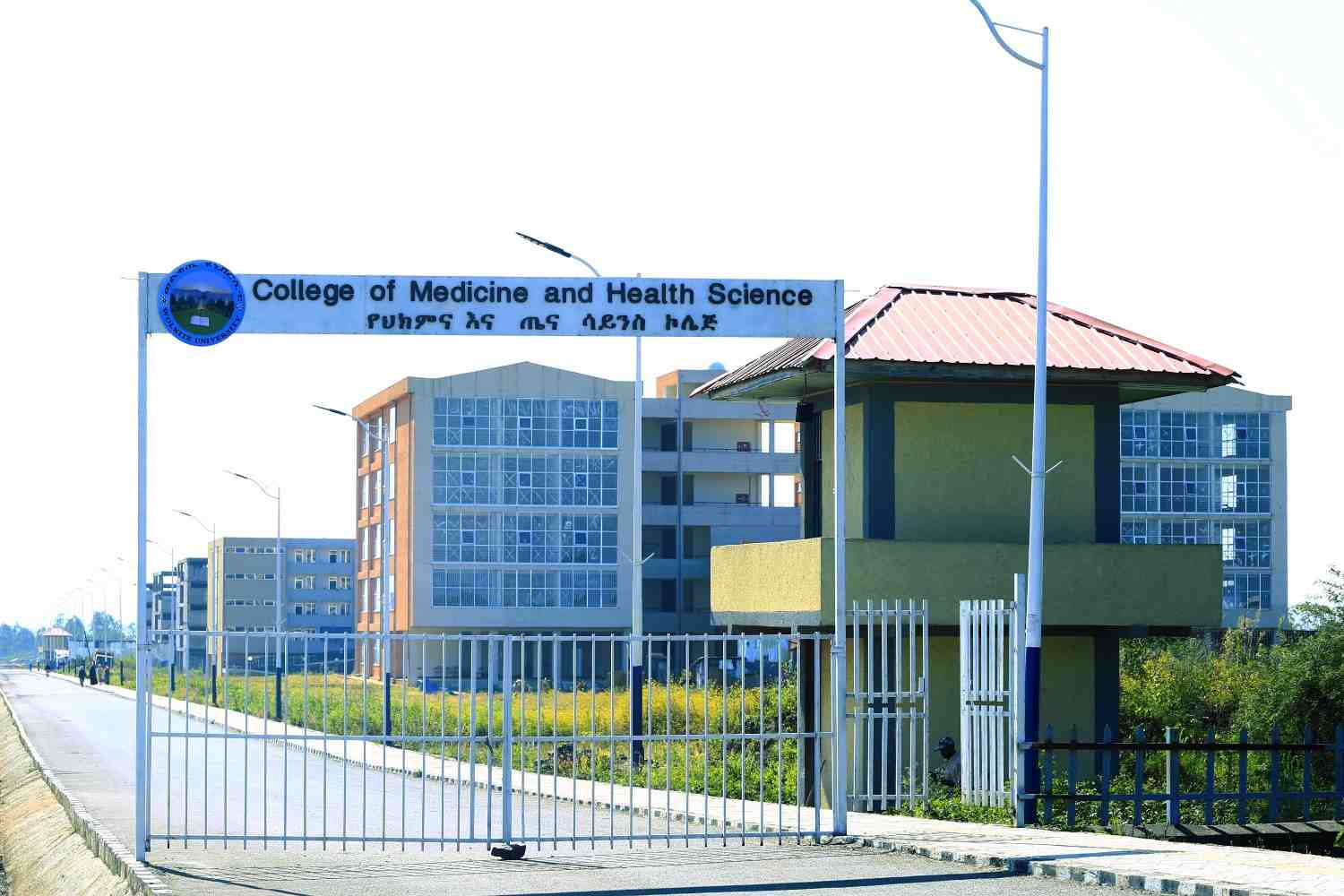
College of Medicine and health Sciences

Head of Department of Biomedical Science
Mr. Abebe Timerga Bereda
Contact Information:
Phone: +251920592604
Email:
An Overview of Department of Biomedical Science
The Department of Biomedical Science, under the College of Medicine and Health Sciences at Wolkite University, was established to provide foundational and advanced biomedical education that supports various health science disciplines. Biomedical Science serves as the backbone of modern healthcare education, encompassing key areas such as human anatomy, physiology, biochemistry, pathology, microbiology, pharmacology, and molecular biology.
The department plays a critical role in laying the scientific groundwork for students pursuing careers in medicine, nursing, midwifery, anesthesia, public health, and other allied health fields. Through rigorous academic instruction and practical laboratory training, the department ensures that students acquire a deep understanding of the human body, disease mechanisms, and the principles of medical science.
In addition to its teaching mandate, the department is engaged in research, community service, and interdisciplinary collaboration. It strives to produce professionals who are not only academically excellent but also ethically grounded and responsive to national health challenges.
Objectives/Goals
The Department of Biomedical Science aims to:
- Deliver High-Quality Education: Provide a comprehensive and integrated biomedical science curriculum aligned with national and international standards.
- Support Health Science Programs: Serve as a core department providing essential courses to all programs within the College of Medicine and Health Sciences.
- Promote Scientific Literacy: Foster critical thinking, scientific inquiry, and evidence-based understanding among students.
- Encourage Research and Innovation: Promote basic and applied research that contributes to medical knowledge and addresses local and national health problems.
- Strengthen Interdisciplinary Collaboration: Work closely with clinical and public health departments to ensure a well-rounded educational experience.
- Contribute to Community Service: Participate in community-based education and outreach programs to improve health awareness and disease prevention.
- Develop Academic Excellence: Build the capacity of academic staff through professional development, research engagement, and collaborative projects.
Duties and Responsibilities
Academic Duties
- Deliver foundational biomedical science courses such as anatomy, physiology, microbiology, biochemistry, pathology, and pharmacology.
- Prepare and update course syllabi, lecture notes, and laboratory manuals.
- Conduct practical sessions and supervise laboratory experiments to enhance students' applied knowledge.
- Evaluate student performance through exams, assignments, and practical assessments.
- Participate in curriculum development and review processes to maintain academic relevance and quality.
Research Responsibilities
- Initiate and participate in biomedical research that contributes to scientific knowledge and public health solutions.
- Support students in conducting undergraduate research projects.
- Publish research findings in peer-reviewed journals and present at scientific conferences.
- Seek collaboration and funding for research initiatives at national and international levels.
Community and Institutional Responsibilities
- Participate in health awareness and outreach programs in collaboration with other departments.
- Contribute to university-led public health campaigns and educational seminars.
- Support interdisciplinary activities that integrate biomedical knowledge into clinical practice.
- Engage in departmental planning, reporting, and institutional development efforts.
- Mentor junior staff and contribute to capacity-building activities.

Head of Department of Pharmacy
Mr. Feki Nekir Dereja
Contact Information:
Phone: + 251923136135
Email:
An Overview of Department of Pharmacy
The Department of Pharmacy at Wolkite University was established as a vital academic unit within the College of Medicine and Health Sciences to support Ethiopia's growing demand for competent pharmaceutical professionals. The establishment of the department aligns with national healthcare development goals aimed at improving access to quality medication, ensuring rational drug use, and strengthening the overall pharmaceutical sector.
The department offers a Bachelor of Pharmacy (B.Pharm) degree program that integrates scientific knowledge with practical training in pharmaceutical sciences, clinical pharmacy, pharmacology, pharmaceutical technology, and public health pharmacy. The curriculum is competency-based and is delivered through classroom instruction, laboratory practice, hospital attachments, and community pharmacy experiences.
The Department of Pharmacy also contributes to research, policy advocacy, and community engagement activities. It aims to produce graduates who can serve in hospitals, pharmaceutical industries, regulatory agencies, academic institutions, and community health settings with high professional and ethical standards.
Objectives/Goals
The primary objectives of the Department of Pharmacy are to:
- Train Competent Pharmacists: Produce qualified pharmacy professionals with the skills and knowledge necessary for safe and effective medication management.
- Promote Rational Drug Use: Equip students to contribute to evidence-based, patient-centered pharmaceutical care.
- Support Public Health Goals: Strengthen the pharmaceutical sector's role in disease prevention, health promotion, and therapeutic management.
- Ensure Quality Education: Deliver a curriculum that meets national and international standards for pharmaceutical education.
- Advance Research and Innovation: Promote scientific inquiry and research in drug development, pharmaceutical care, and health systems.
- Foster Professionalism and Ethics: Instill values of responsibility, integrity, and accountability in the pharmacy profession.
- Engage with Communities: Implement outreach programs that improve access to essential medicines and raise awareness about safe medication use.
Duties and Responsibilities
Academic Responsibilities
v Provide instruction in key pharmaceutical science areas such as pharmaceutics, pharmacology, pharmacognosy, medicinal chemistry, and clinical pharmacy.
v Supervise student laboratory work, research projects, and clinical training in hospitals and community pharmacies.
v Continuously revise and update the curriculum to reflect current scientific and professional trends.
v Conduct assessments and evaluations to ensure student learning outcomes are met.
Clinical and Practical Engagement
v Coordinate student rotations in hospital pharmacies, community pharmacies, and drug supply agencies.
v Promote good pharmacy practices, including drug dispensing, patient counseling, and pharmacovigilance.
v Ensure compliance with national drug regulations and guidelines during practical training.
Research and Development
v Undertake research in pharmaceutical sciences, traditional medicine, drug policy, and related fields.
v Support staff and student-led research initiatives and publications.
v Collaborate with stakeholders to generate evidence for improving pharmaceutical services and drug policy.
Community Service
v Organize drug use education and awareness campaigns in the community.
v Provide technical support and training to local health institutions on medicine management.
v Engage in public health initiatives related to rational medicine use and antimicrobial resistance.
Administrative Functions
v Participate in planning, resource mobilization, and departmental reporting.
v Represent the department in academic and professional forums.
v Facilitate partnerships with regulatory bodies, pharmaceutical industries, and healthcare institutions.
v Ensure adherence to ethical, academic, and institutional standards in all departmental activities.

Head of Department of Nursing
Mr. Tariku Gebre Haile
Contact Information:
Phone: +251917411183
Email:
An Overview of Department of Nursing
The Department of Nursing at Wolkite University, housed within the College of Medicine and Health Sciences, was established to address the growing need for well-trained nursing professionals in Ethiopia’s healthcare system. In alignment with national health priorities and the World Health Organization’s call for strengthening the nursing workforce, the department plays a pivotal role in producing skilled, ethical, and compassionate nurses who can deliver high-quality care at all levels of the healthcare system.
The nursing program is designed to be comprehensive, competency-based, and community-oriented. It combines classroom instruction, simulation-based training, and supervised clinical practice in hospitals, health centers, and community settings. The curriculum emphasizes holistic patient care, critical thinking, health education, evidence-based practice, and interprofessional collaboration.
In addition to its core teaching responsibilities, the department actively contributes to health research, policy development, and community engagement activities aimed at promoting public health and strengthening health service delivery.
Objectives/Goals
The Department of Nursing aims to:
- Produce Competent Nurses: Train qualified nursing professionals equipped with clinical, ethical, and leadership competencies.
- Improve Healthcare Delivery: Support the health sector by producing nurses capable of delivering safe and effective care across the lifespan.
- Enhance Nursing Education: Deliver high-quality, practice-based nursing education aligned with national and international standards.
- Promote Ethical Practice: Foster integrity, empathy, and patient-centered care in all nursing activities.
- Advance Research: Encourage research and innovation in nursing practice, education, and public health.
- Strengthen Community Health: Engage in community-based services that promote disease prevention, health promotion, and social accountability.
- Support Interdisciplinary Collaboration: Foster collaborative healthcare practice through joint learning and service with other health disciplines.
3. Duties and Responsibilities
Academic Duties
ü Deliver lectures, seminars, and practical sessions in core nursing courses such as medical-surgical nursing, pediatrics, psychiatry, community health, and maternal health nursing.
ü Supervise student clinical practice in affiliated hospitals and health centers.
ü Develop, review, and update curricula, course modules, and teaching materials.
ü Assess student learning through assignments, practical exams, and continuous assessments.
Clinical and Professional Roles
ü Ensure student adherence to professional standards, clinical protocols, and patient safety guidelines.
ü Liaise with clinical partners to coordinate effective clinical teaching and supervision.
ü Model professional behavior and nursing ethics in all teaching and practice settings.
Research and Development
ü Conduct and support research in nursing science, public health, and healthcare systems.
ü Mentor students and junior staff in academic research and evidence-based practice.
ü Publish findings and contribute to the advancement of nursing knowledge and policy.
Community Engagement
ü Participate in outreach and health promotion activities targeting local communities.
ü Organize nursing-led initiatives to raise awareness about disease prevention and healthy living.
ü Provide capacity-building support to health facilities in the region.
Administrative and Collaborative Roles
ü Participate in departmental planning, budgeting, and reporting processes.
ü Engage in quality assurance, curriculum committees, and institutional reviews.
ü Represent the department in academic, governmental, and professional forums.
ü Promote professional development among faculty and staff.

Head of Department of Midwifery
Mr. Seid Jemal Mohammed
Contact Information:
Phone: +251921509548
Email:
An Overview of Department of Midwifery
The Department of Midwifery at Wolkite University was established under the College of Medicine and Health Sciences to contribute to national efforts aimed at reducing maternal and neonatal mortality and improving reproductive health services across Ethiopia. Recognizing the critical shortage of skilled birth attendants, the department was launched to train highly competent, ethical, and compassionate midwifery professionals who can provide quality care throughout the continuum of maternal and newborn health.
The program is designed in alignment with the national health policy and global standards set by the World Health Organization (WHO) and the International Confederation of Midwives (ICM). The department delivers a competency-based curriculum that combines rigorous academic instruction, simulation-based learning, and extensive clinical practice in affiliated hospitals and health centers.
In addition to teaching, the department is actively engaged in research, community outreach, and service delivery. Through its graduates and faculty, it plays a significant role in improving maternal and child health outcomes in both rural and urban settings.
Objectives/Goals
The Department of Midwifery aims to:
- Produce Competent Professionals: Train midwives with the knowledge, skills, and attitudes necessary to provide comprehensive maternal, newborn, and reproductive health services.
- Improve Maternal and Child Health: Contribute to the national and global efforts to reduce maternal and neonatal morbidity and mortality through skilled care.
- Deliver Quality Education: Implement a standardized, up-to-date, and practice-oriented midwifery curriculum that meets national and international benchmarks.
- Promote Ethical and Respectful Care: Instill professional values, including confidentiality, respect for women’s rights, and gender-sensitive healthcare delivery.
- Advance Research and Innovation: Encourage research in midwifery and reproductive health that informs policy and enhances practice.
- Engage in Community Services: Conduct outreach programs and participate in community-based education to raise awareness of maternal and reproductive health.
- Foster Interprofessional Collaboration: Work collaboratively with other health science departments to enhance interdisciplinary training and service provision.
Duties and Responsibilities
Academic Activities
- Deliver theoretical and practical midwifery courses to undergraduate students.
- Supervise clinical practicum in hospitals, health centers, and community settings.
- Develop and revise course materials and curricula in accordance with national standards.
- Evaluate students’ academic and clinical performance through continuous assessment and final exams.
Research and Innovation
- Conduct applied research focused on maternal, newborn, and reproductive health issues.
- Support students in undertaking research projects and community-based studies.
- Disseminate research findings through publications, conferences, and workshops.
Community and Clinical Engagement
- Participate in health education and outreach programs focused on maternal and child health.
- Provide technical assistance and capacity-building support to local health facilities.
- Promote the integration of midwifery services within primary health care systems.
Administrative Functions
- Participate in departmental and college-level meetings, planning, and decision-making processes.
- Collaborate with national and regional health bureaus, NGOs, and academic partners.
- Monitor and report on the department’s academic, clinical, and community engagement activities.
- Ensure quality assurance, ethical standards, and professional accountability in all departmental operations.

Head of Department of Public Health
Anteneh Kassa Yalew
Email:
Phone: +251923342226
An Overview of Department of Public Health
The Department of Public Health at Wolkite University, under the College of Health Sciences, plays a pivotal role in advancing the health and well-being of communities through education, research, and community service. Established with the aim of producing competent public health professionals, the department focuses on preventing disease, promoting health, and prolonging life among the population.
The department offers undergraduate and potentially postgraduate programs (such as Bachelor of Science in Public Health), designed to equip students with theoretical knowledge and practical skills in epidemiology, biostatistics, environmental health, health promotion, disease prevention, and health systems management. Through partnerships with health institutions and communities, students gain field experience that prepares them to work in various health sectors across Ethiopia and beyond.
Objectives/Goals
The key objectives and goals of the Public Health Department are:
1. Human Resource Development:
· To train highly qualified public health professionals who are capable of identifying and addressing community health problems using scientific and ethical approaches.
2. Preventive and Promotive Health Focus:
· To produce graduates with a strong foundation in disease prevention, health promotion, and community-based health care.
3. Research and Evidence-Based Practice:
· To foster a culture of research that supports evidence-based public health practices and informs policy and program decisions.
4. Community Engagement and Service:
· To engage in active collaboration with communities and health sectors to improve health outcomes and address local health challenges.
5. Leadership and Policy Influence:
· To prepare graduates to take leadership roles in public health administration, health policy planning, and management.
Duties and Responsibilities
Academic Staff:
· Develop and deliver high-quality teaching materials in core public health areas such as epidemiology, biostatistics, environmental health, health policy, and community health.
· Supervise student research projects and field-based practical attachments.
· Provide academic advising, mentoring, and support to students.
· Conduct public health research and publish findings to contribute to local and global knowledge.
· Participate in curriculum development and continuous quality improvement initiatives.
Community and Clinical Responsibilities:
· Coordinate and participate in community diagnosis, outreach programs, and public health campaigns.
· Collaborate with local health offices and NGOs to implement and evaluate public health interventions.
· Train and support community health workers and local health professionals through workshops and continuing education programs.
Administrative and Leadership Roles:
· Develop strategic plans and implement departmental goals in alignment with the university’s vision.
· Monitor and evaluate academic and community-based programs.
· Facilitate staff development and coordinate interdepartmental collaborations.
· Represent the department in academic, research, and policy-making forums at local and national levels.
An Overview of Department of Midwifery
The Department of Midwifery at Wolkite University was established under the College of Medicine and Health Sciences to contribute to national efforts aimed at reducing maternal and neonatal mortality and improving reproductive health services across Ethiopia. Recognizing the critical shortage of skilled birth attendants, the department was launched to train highly competent, ethical, and compassionate midwifery professionals who can provide quality care throughout the continuum of maternal and newborn health.
The program is designed in alignment with the national health policy and global standards set by the World Health Organization (WHO) and the International Confederation of Midwives (ICM). The department delivers a competency-based curriculum that combines rigorous academic instruction, simulation-based learning, and extensive clinical practice in affiliated hospitals and health centers.
In addition to teaching, the department is actively engaged in research, community outreach, and service delivery. Through its graduates and faculty, it plays a significant role in improving maternal and child health outcomes in both rural and urban settings.
Objectives/Goals
The Department of Midwifery aims to:
- Produce Competent Professionals: Train midwives with the knowledge, skills, and attitudes necessary to provide comprehensive maternal, newborn, and reproductive health services.
- Improve Maternal and Child Health: Contribute to the national and global efforts to reduce maternal and neonatal morbidity and mortality through skilled care.
- Deliver Quality Education: Implement a standardized, up-to-date, and practice-oriented midwifery curriculum that meets national and international benchmarks.
- Promote Ethical and Respectful Care: Instill professional values, including confidentiality, respect for women’s rights, and gender-sensitive healthcare delivery.
- Advance Research and Innovation: Encourage research in midwifery and reproductive health that informs policy and enhances practice.
- Engage in Community Services: Conduct outreach programs and participate in community-based education to raise awareness of maternal and reproductive health.
- Foster Interprofessional Collaboration: Work collaboratively with other health science departments to enhance interdisciplinary training and service provision.
Duties and Responsibilities
Academic Activities
Ø Deliver theoretical and practical midwifery courses to undergraduate students.
Ø Supervise clinical practicum in hospitals, health centers, and community settings.
Ø Develop and revise course materials and curricula in accordance with national standards.
Ø Evaluate students’ academic and clinical performance through continuous assessment and final exams.
Research and Innovation
Ø Conduct applied research focused on maternal, newborn, and reproductive health issues.
Ø Support students in undertaking research projects and community-based studies.
Ø Disseminate research findings through publications, conferences, and workshops.
Community and Clinical Engagement
Ø Participate in health education and outreach programs focused on maternal and child health.
Ø Provide technical assistance and capacity-building support to local health facilities.
Ø Promote the integration of midwifery services within primary health care systems.
Administrative Functions
Ø Participate in departmental and college-level meetings, planning, and decision-making processes.
Ø Collaborate with national and regional health bureaus, NGOs, and academic partners.
Ø Monitor and report on the department’s academic, clinical, and community engagement activities.
Ø Ensure quality assurance, ethical standards, and professional accountability in all departmental operations.

Dean of School of Medicine
Dr. Feleke Habte Gebremichael
Contact Information:
Phone: +251911879921
Email: f
An Overview of School of Medicine
The School of Medicine at Wolkite University was established as a flagship academic unit within the College of Medicine and Health Sciences to contribute meaningfully to the country's healthcare system by training highly competent and ethical medical doctors. Its creation responds to the national need for expanding access to quality medical education and addressing the shortage of skilled physicians in both urban and rural areas of Ethiopia.
The school offers a Bachelor of Medicine and Bachelor of Surgery (MD) program based on a modular, integrated, and competency-based curriculum that aligns with national medical education standards and global best practices. It integrates foundational medical sciences, clinical skills training, and community-based education to ensure the holistic development of students.
In addition to teaching and clinical training, the School of Medicine is actively engaged in health research, policy advocacy, and community service programs aimed at improving healthcare delivery and population health. The school works in close partnership with local hospitals, health bureaus, and international academic institutions to enhance the quality and relevance of its medical education.
Objectives/Goals
The primary objectives of the School of Medicine are to:
- Produce Competent Medical Doctors: Train highly skilled, ethical, and compassionate physicians capable of addressing the healthcare needs of diverse populations.
- Promote Quality Medical Education: Deliver an up-to-date, competency-based, and student-centered curriculum that meets national and global standards.
- Support the Healthcare System: Strengthen the country’s healthcare capacity by deploying well-prepared graduates to underserved regions.
- Advance Research and Innovation: Promote research in clinical medicine, public health, and health systems that inform policy and improve practice.
- Engage in Community Service: Implement outreach programs and community-based training to address local health challenges.
- Foster Professionalism and Ethics: Instill values of integrity, accountability, and humanism in all aspects of medical practice.
- Encourage Interdisciplinary Collaboration: Promote collaborative learning and service delivery among health science disciplines.
Duties and Responsibilities
Academic Responsibilities
- Provide high-quality instruction in preclinical, para-clinical, and clinical disciplines through lectures, tutorials, and hands-on sessions.
- Supervise students during clinical rotations in affiliated hospitals and health centers.
- Design, implement, and revise the MD curriculum in line with national guidelines and medical education reforms.
- Assess student performance using formative and summative evaluation tools.
Clinical and Professional Practice
- Facilitate student learning in real-life healthcare settings to enhance diagnostic, therapeutic, and communication skills.
- Promote ethical decision-making and patient-centered care in all clinical activities.
- Collaborate with teaching hospitals and health institutions to ensure effective clinical education.
Research and Scholarly Work
- Undertake and supervise research in clinical medicine, epidemiology, health policy, and health education.
- Publish findings in peer-reviewed journals and disseminate knowledge through conferences and workshops.
- Encourage evidence-based practice and critical inquiry among students and faculty.
Community Engagement
- Conduct community-based education and training (CBTP, rural attachment, etc.) that links students with public health realities.
- Participate in health outreach programs that promote disease prevention and health education in surrounding communities.
- Collaborate with local health authorities to address community health priorities.
Administrative and Institutional Duties
- Participate in strategic planning, budgeting, and academic governance within the college and university.
- Ensure compliance with academic standards, institutional policies, and national regulations.
- Coordinate partnerships with local and international institutions for academic and research collaboration.
- Promote continuous professional development among staff and faculty.

Head of Department of Anesthesia
Mr. Shamill Eanga Helill
Contact Information:
Phone: +251922848340
Email:
An Overview of Department of Anesthesia
The Department of Anesthesia is one of the academic units under the College of Medicine and Health Sciences at Wolkite University. It was established in response to the national need for qualified anesthesia professionals who can contribute effectively to improving the safety and accessibility of surgical and emergency medical services in Ethiopia.
The department is committed to producing competent, ethical, and skilled anesthesia professionals through quality education, practical training, and community-oriented service. As part of Wolkite University’s broader mission to enhance healthcare education and service delivery, the department plays a pivotal role in addressing the country's shortage of trained anesthesia personnel.
To ensure students receive well-rounded training, the department integrates theoretical instruction with extensive clinical practice in affiliated hospitals and health centers. In addition to academic training, the department is actively involved in research, professional development, and public health initiatives that support the national healthcare system.
Objectives/Goals
The Department of Anesthesia aims to:
- Provide High-Quality Education: Deliver a comprehensive and up-to-date curriculum in anesthesia science that meets national and international standards.
- Produce Competent Professionals: Train students to become knowledgeable, technically skilled, and ethically responsible anesthesia practitioners.
- Promote Clinical Excellence: Equip students with hands-on clinical skills to provide safe perioperative, critical care, and pain management services.
- Support National Health Priorities: Contribute to addressing the shortage of anesthesia professionals and strengthening surgical services across the country.
- Enhance Research and Innovation: Encourage faculty and students to engage in research activities that address challenges in anesthesia and critical care.
- Foster Community Engagement: Participate in outreach programs, health education, and public service initiatives in both urban and rural settings.
- Advance Professional Development: Support continuous learning and capacity building for staff and students through training, workshops, and academic exchange.
Duties and Responsibilities
Academic Duties
ü Deliver theoretical and practical courses in anesthesia for undergraduate students.
ü Develop and regularly update course syllabi, manuals, and teaching materials.
ü Supervise student clinical practice, internships, and research projects.
ü Organize skill-based training sessions, simulations, and competency assessments.
ü Participate in curriculum review and academic quality assurance processes.
Clinical Duties
ü Coordinate and facilitate students’ clinical placements in affiliated hospitals and health centers.
ü Provide anesthesia services during university-supported clinical programs and outreach activities.
ü Ensure that students adhere to safety and professional standards during clinical practice.
ü Participate in multidisciplinary clinical teams for surgery, emergency, and critical care services.
Research and Community Service
ü Initiate and participate in research projects related to anesthesia, patient safety, and healthcare delivery.
ü Disseminate research findings through publications and conferences.
ü Engage in community-based health initiatives, including surgical outreach and health education campaigns.
ü Provide technical support for local health facilities during public health emergencies and campaigns.
Administrative and Institutional Duties
ü Participate in departmental and college-level meetings, planning, and decision-making.
ü Contribute to the strategic goals of the College of Medicine and Health Sciences.
ü Coordinate professional development opportunities for academic staff.
ü Collaborate with other departments, academic institutions, and stakeholders for program improvement.

Chief Academic Director of the College of Medicine and Health Sciences
Dr. Tesfaye Petros Mohammed
Contact Information:
Phone: +251991374299
Email:
Objective/Goal of the Dean
The Dean of the College of Health and Medical Sciences at Wolkite University is responsible for providing strategic academic and administrative leadership to enhance the quality of health education, research, and community service. The goal is to position the College as a center of excellence that contributes to national health development, promotes innovation, and addresses regional and national healthcare challenges through training competent health professionals.
Duties and Responsibilities
1. Academic Leadership
Ø Oversee the design, implementation, and continuous improvement of undergraduate and postgraduate health programs.
Ø Ensure that academic offerings align with national health priorities and international standards.
Ø Promote academic excellence, student-centered learning, and competency-based education.
2. Strategic Planning and Administration
Ø Lead the preparation and implementation of the college’s strategic, operational, and annual plans in alignment with the university’s goals.
Ø Manage the college’s human, financial, and material resources effectively and efficiently.
Ø Supervise academic departments, support units, and administrative staff within the college.
3. Research and Scholarly Development
Ø Promote a research culture among faculty and students, with a focus on addressing local and national health issues.
Ø Facilitate partnerships and collaborations for joint research, grants, and innovation.
Ø Ensure the publication and dissemination of research outputs that contribute to public health and medical knowledge.
4. Community Engagement and Public Health Outreach
Ø Strengthen the college’s involvement in community-based education and service.
Ø Collaborate with healthcare facilities, government agencies, and NGOs to support regional health initiatives.
Ø Lead efforts in health promotion, disease prevention, and clinical outreach services.
5. Quality Assurance and Accreditation
Ø Ensure compliance with national accreditation standards and health regulatory bodies.
Ø Oversee internal quality assurance mechanisms, curriculum reviews, and academic audits.
Ø Support continuous improvement through data-driven decision-making and stakeholder feedback.
6. Student Affairs and Support
Ø Foster an inclusive and supportive learning environment that enhances student engagement and academic success.
Ø Address student concerns, support mentorship programs, and promote student involvement in professional development.
Ø Ensure fair and transparent evaluation, placement, and graduation processes.
7. External Relations and Institutional Partnerships
Ø Represent the college in national and international forums, consortia, and professional bodies.
Ø Develop linkages with teaching hospitals, research institutions, and international universities for academic exchange and collaboration.
Ø Promote the visibility and reputation of the college nationally and globally.
8. Ethics and Professionalism
Ø Uphold and promote the highest standards of ethics, integrity, and professionalism in all academic, research, and clinical activities.
Ø Encourage ethical practices in teaching, research, community service, and healthcare delivery.
Historical Background
College of Medicine and Health Sciences (CMHS) was established in 2005 G.C. During its establishment, there was only public health department which had about 56 students and 4 instructors.
Currently the college is running seven undergraduate programs (Anaesthesia, Medical laboratory science, and Public health, Medicine, Midwifery, Nursing and Pharmacy) and 5 Masters Program (Public Health Nutrition; Reproductive Health and Medical Parasitology, Maternity & Reproductive Health nursing and Clinical midwifery). Additionally the college offers 4 graduate medical specially programs (Obstetrics and Gynecology, Pediatrics and Child Health, General Surgery and Internal Medicine). The programs have their own demonstration and skill laboratories. The teaching hospital that operates under the college provides quality medical service to the surrounding community. We conduct high-quality class research in different subjects from basic science to translational research. The college has around 1104 undergraduates & 24 graduate students, 59 residents pursuing postgraduate study in Medical Specialty programs and more than 207 academic staffs.
Vision
The College of Medicine and Health Sciences envisions to become a leading institution in health education that fosters innovation, research, and community engagement, thereby improving health outcomes and promoting health equity in Ethiopia by 2030
Mission
College of Medicine and Health Sciences is dedicated to providing high-quality education and training in health sciences, fostering the development of skilled healthcare professionals who are committed to improving health outcomes in Ethiopia. We aim to promote innovation, research, and community engagement, empowering our students to address local and national health challenges through compassionate, ethical, and evidence-based practices. By cultivating partnerships with healthcare institutions and stakeholders, we strive to enhance the quality of health services and contribute to the overall well-being of the communities we serve.