College of Computing and Informatics

Department Head of Information Systems
Mr. Abdulmalik Johar
Contact Information:
Phone: +251912702664
Email:
Objectives/Goals
I. Objectives of the Department Head of Information Systems
- Ensure Academic Excellence: To provide strategic and academic leadership in delivering high-quality Information Systems education aligned with Wolkite University’s mission and national higher education standards.
- Curriculum Relevance and Innovation: To develop and regularly update curricula that reflect current technological trends and labor market demands in the field of Information Systems.
- Promote Research and Community Engagement: To foster research, innovation, and community service activities that address societal challenges and contribute to local and national development.
- Strengthen Institutional Capacity: To lead the department in building institutional capacity through staff development, resource mobilization, and infrastructure enhancement.
- Enhance Collaboration and Partnerships: To establish strong linkages with industries, government institutions, and academic partners to enhance learning, internship, and research opportunities.
II. Responsibilities of the Department Head of Information Systems
A. Academic and Program Management
Ø Lead the preparation, implementation, and continuous improvement of undergraduate and postgraduate programs.
Ø Ensure the relevance and quality of course content and teaching methods.
Ø Coordinate academic calendars, course offerings, and exam schedules.
B. Administrative and Resource Management
Ø Prepare and administer the department’s annual plan and budget in line with university guidelines.
Ø Ensure efficient utilization and maintenance of departmental resources, including computer labs and instructional materials.
Ø Maintain accurate records of faculty workload, class schedules, and departmental operations.
C. Staff Supervision and Development
Ø Assign teaching and administrative responsibilities to academic and support staff based on qualifications and workload policies.
Ø Evaluate staff performance and recommend promotion, leave, and professional development opportunities.
Ø Encourage staff to engage in academic research, publication, and capacity-building programs.
D. Research, Publication, and Innovation
Ø Promote research activities among faculty and students in areas such as enterprise systems, e-government, database management, and digital transformation.
Ø Facilitate publication of research outputs and organize departmental seminars and conferences.
Ø Encourage innovation and entrepreneurial thinking in students and faculty.
E. Student Support and Academic Advising
Ø Oversee academic advising services to support students in course selection, graduation planning, and career development.
Ø Address student academic grievances, discipline issues, and welfare concerns in collaboration with the college dean and registrar.
Ø Monitor student performance and recommend interventions for academic improvement.
F. Quality Assurance and Reporting
Ø Implement quality assurance practices in teaching, assessment, and curriculum delivery.
Ø Prepare and submit semester and annual performance reports to the College of Informatics and university management.
Ø Coordinate internal departmental reviews and contribute to external accreditation processes.
G. Community Engagement and Industry Linkages
Ø Develop partnerships with local businesses, government organizations, and NGOs to support community-based projects and student internships.
Ø Organize community outreach programs that utilize Information Systems to address local development issues.
Ø Involve external stakeholders in program evaluation and curriculum advisory activities.
H. Strategic Planning and Institutional Contribution
Ø Participate in strategic planning at the college and university level.
Ø Represent the department in academic councils, committees, and external forums as delegated by the Dean.
Ø Contribute to the realization of Wolkite University’s vision to be a center of excellence in teaching, research, and community service.

Department Head of Software Engineering
Mrs. Marta Sintayehu Fufa
Contact Information:
Phone: +251931467449
Email:
Objectives/Goals
I. Objectives of the Department Head of Software Engineering
- Promote Academic Excellence: To lead the department in delivering high-quality and practical software engineering education aligned with national standards and the university's mission.
- Ensure Curriculum Relevance and Innovation: To develop and maintain a dynamic, industry-driven curriculum that reflects current software development trends and technologies.
- Strengthen Research and Development: To foster a research culture that addresses national and global challenges through innovative software solutions.
- Facilitate Technological Advancement: To promote the integration of emerging technologies and tools in teaching, learning, and software development practices.
- Support Staff and Student Development: To provide leadership in building the capacity of academic staff and supporting students to excel academically and professionally.
- Enhance Community and Industry Engagement: To build strong collaborations with industry, government, and community stakeholders to enhance practical training, internships, and outreach.
- Uphold Quality and Institutional Standards: To ensure the department adheres to quality assurance frameworks and contributes to the strategic goals of Wolkite University.
II. Responsibilities of the Department Head of Software Engineering
A. Academic and Curriculum Leadership
- Coordinate the development, implementation, and evaluation of undergraduate and postgraduate programs in Software Engineering.
- Ensure that teaching methods and course content are aligned with industry practices and technological trends.
- Lead curriculum reviews and ensure integration of soft skills, ethical considerations, and entrepreneurship in software engineering education.
B. Administrative and Operational Management
- Manage the day-to-day operations of the department including class scheduling, exam coordination, and budget administration.
- Prepare and implement annual action plans and resource allocation aligned with the College of Informatics and university priorities.
- Maintain departmental records, reports, and compliance with institutional policies.
C. Staff Management and Professional Development
- Assign academic and administrative duties to faculty and support staff based on expertise and workload guidelines.
- Facilitate academic staff development through training, research support, conference participation, and career mentoring.
- Conduct performance evaluations and recommend promotions, disciplinary actions, or recognitions.
D. Research and Innovation Promotion
- Support faculty and students in conducting relevant research in software engineering fields such as AI, cloud computing, mobile and web development, cybersecurity, etc.
- Encourage participation in national and international research grants and innovation competitions.
- Organize research workshops, seminars, and publications to disseminate findings.
E. Student Support and Advising
- Oversee academic advising to guide students in course selection, graduation requirements, and career planning.
- Monitor student academic performance and take necessary actions for academic support and progression.
- Facilitate extracurricular and innovation activities such as coding clubs, hackathons, and software project exhibitions.
F. Infrastructure and ICT Resource Management
- Ensure that software laboratories, development tools, and computing facilities are up-to-date and fully functional.
- Recommend procurement and maintenance of software and hardware resources necessary for effective learning and project development.
G. Industry and Community Linkages
- Establish strong linkages with software companies, startups, and public sector institutions for student internships, joint projects, and job placement.
- Coordinate community engagement projects where software engineering solutions are applied to solve local challenges.
- Invite industry professionals for guest lectures, seminars, and curriculum advisory meetings.
H. Quality Assurance and Reporting
- Implement internal quality assurance systems aligned with HERQA and university requirements.
- Prepare and submit semester and annual performance reports to the College Dean
- Ensure the department meets accreditation standards and participates actively in institutional quality audits.
I. Strategic Contribution and Institutional Involvement
- Represent the department in university-wide committees, councils, and strategic planning sessions.
- Align departmental goals with the university’s vision to become a center of excellence in science, technology, and innovation.
- Contribute to national development through policy input, curriculum alignment, and community service in software and IT.

Department Head of Computer Science
Mr. Andamlak Kebede
Contact Information:
Phone: +251933187796
Email:
Objectives of the Department Head of Computer Science
- Academic Leadership: Provide academic leadership in teaching, research, and curriculum development to ensure academic excellence and innovation in the field of computer science.
- Quality Education: Ensure the delivery of high-quality education that meets national standards and aligns with emerging trends in computer science and technology.
- Research Development: Foster a research-oriented environment by promoting faculty and student involvement in scientific research and innovation.
- Curriculum Relevance: Continuously update and revise the curriculum to keep pace with global developments in computer science and industry needs.
- Resource Optimization: Efficiently manage the department’s human, financial, and material resources to support academic and research goals.
- Collaboration and Networking: Establish partnerships with industry, academic institutions, and government bodies for knowledge exchange and resource mobilization.
- Staff Development: Encourage professional development and capacity building among faculty and staff.
Responsibilities of the Department Head of Computer Science
- Academic Management
- Oversee the planning, implementation, and evaluation of undergraduate and postgraduate programs.
- Ensure the quality and integrity of teaching and assessment processes.
- Administrative Oversight
- Prepare and manage the department’s annual budget, procurement, and resource allocation.
- Supervise staff workload distribution and performance evaluation.
- Curriculum and Program Development
- Lead curriculum review and development in line with national and international standards.
- Propose and develop new programs that respond to technological advancements and market demands.
- Research and Innovation
- Promote a strong research culture within the department.
- Facilitate research grant applications and collaborative research projects.
- Staff Supervision and Development
- Provide mentorship and support for faculty development and career advancement.
- Recommend hiring, promotion, and training of academic and technical staff.
- Student Affairs
- Address student academic issues, grievances, and welfare.
- Facilitate academic advising and support for students’ academic success.
- Quality Assurance
- Ensure compliance with institutional and national quality assurance standards.
- Prepare and submit periodic academic and administrative performance reports.
- Strategic Planning
- Contribute to the development of the university’s strategic goals and translate them into departmental plans.
- Monitor and evaluate the implementation of the department’s strategic objectives.
- Community Engagement and Outreach
- Promote community service and outreach programs that apply computer science solutions to societal needs.
- Represent the department in university committees, conferences, and public events.
- ICT Infrastructure Development
- Identify and recommend technological tools and platforms that enhance teaching and research.
- Oversee the maintenance and upgrade of computing laboratories and ICT resources.

Department Head of Information Technology
Mr. Abdo Ababor Abafogi
Contact Information:
Phone: +251917015724
Email:
Objectives/Goals
- Ensure Quality IT Education: To lead the department in providing high-quality, practical, and up-to-date Information Technology education that meets national and global standards.
- Promote Curriculum Relevance and Innovation: To design and continuously improve the IT curriculum to reflect current technological trends, labor market demands, and digital transformation priorities.
- Advance Research and Applied Innovation: To promote applied research and innovative projects that contributes to national development and technological advancement.
- Enhance Digital Competency and Skills: To develop students’ and staff’s digital skills and competencies to meet the dynamic needs of the ICT sector.
- Strengthen Industry and Community Linkages: To build strong relationships with industry, government, and community stakeholders for internships, joint projects, and outreach.
- Support Staff Development and Institutional Capacity: To lead efforts in building the professional and academic capacity of the department's staff and supporting the university’s digital infrastructure initiatives.
- Maintain Academic Standards and Compliance: To ensure the department operates in full compliance with Wolkite University policies and national higher education regulations, including HERQA standards.
Responsibilities of the Department Head of Information Technology
A. Academic Leadership and Curriculum Management
v Coordinate the planning, implementation, and periodic review of undergraduate and postgraduate programs in Information Technology.
v Ensure the integration of emerging technologies such as cloud computing, cybersecurity, big data, networking, and system administration into the curriculum.
v Promote competency-based, practical, and project-oriented learning.
B. Administrative Oversight
v Manage the department’s human, financial, and material resources efficiently.
v Prepare and execute annual plans, budgets, procurement requests, and progress reports.
v Supervise the preparation of teaching timetables, exam schedules, and academic calendars.
C. Staff Management and Development
v Allocate teaching and administrative duties based on staff qualifications, interests, and workload policies.
v Support staff in pursuing postgraduate studies, certifications, and professional development.
v Monitor staff performance and recommend incentives, disciplinary measures, or career advancement.
D. Research and Innovation Promotion
v Encourage and coordinate research activities in IT domains such as network security, system integration, and e-learning systems.
v Facilitate access to research funding and publication opportunities.
v Organize departmental seminars, tech talks, and workshops to promote a culture of inquiry and problem-solving.
E. Student Support and Development
v Oversee academic advising, mentorship, and career guidance for students.
v Facilitate internships, final year projects, and industrial attachments.
v Address student concerns, grievances, and academic support needs in collaboration with university bodies.
F. ICT Resource and Infrastructure Management
v Ensure that IT labs and digital learning platforms are fully functional and up to date.
v Recommend upgrades and acquisition of necessary hardware, software, and teaching tools.
v Promote the use of learning management systems and virtual learning tools.
G. Industry Collaboration and Community Engagement
v Establish linkages with ICT companies, public institutions, and NGOs for knowledge sharing, joint research, and employment opportunities.
v Coordinate IT-based community service programs that address local challenges through technology.
v Involve external stakeholders in curriculum review and departmental planning.
H. Quality Assurance and Monitoring
v Implement internal quality assurance mechanisms aligned with HERQA and institutional frameworks.
v Prepare periodic reports on departmental performance, student achievement, and staff activities.
v Lead internal assessments and support external evaluation and accreditation processes.
I. Strategic Planning and Institutional Participation
v Participate in university-level strategic planning, policy formulation, and governance structures.
v Align departmental objectives with the vision of Wolkite University to become a center of excellence in science, technology, and innovation.
v Represent the department in academic councils, professional associations, and external meetings.

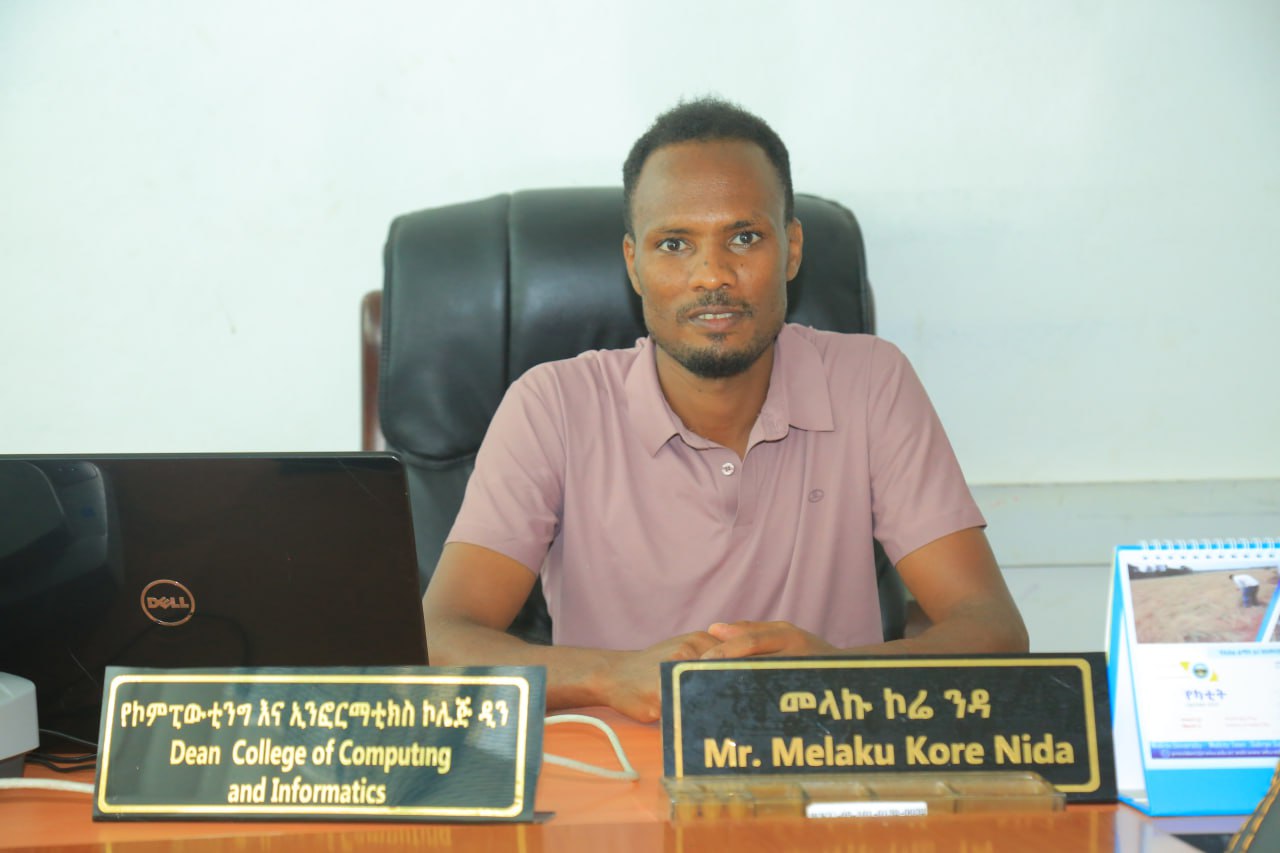
Dean for College of Computing and Informatics
Melaku Kore Nida
Phone: +251910561133
Email:
The main goal or purpose of my position, Dean for College of Computing and Informatics is to provide academic and administrative leadership for the programs under the college. This includes overseeing academic programs, ensuring high-quality teaching and research, managing faculty and staff, and fostering an environment that promotes student success. The dean is also responsible for budgeting, resource allocation, and implementing policies that align with the university's mission and goals
As college dean, long-term career growth and skill development objectives can focus on both personal professional growth and the continued development of the institution's academic mission. These objectives often involve refining leadership, management, academic, and external relationship-building skills. Here are some specific long-term objectives:
- Faculty and Staff Development
- Research and Scholarly Contribution
- Financial and Resource Management
- External Engagement and Networking
- Enhancing Student Success
- Duties and Responsibilities: Duties and responsibilities of the position clearly stated in Wolkite University Legislation at Article 47 and as a summary the following are major duties and responsibilities.
- Leadership: Serve as chairperson of the College Academic Committee (CAC) and College Staff Advisory Committee (SAC).
- Implement Decisions: Carry out CAC decisions regarding appointments, promotions, admissions, graduations, and other university-related matters.
- Program Development: Propose and manage the establishment, revision, or dissolution of academic programs.
- Follow-up and Reporting: Monitor the implementation of CAC/SAC recommendations and report back on progress.
- Budget and Planning: Coordinate the preparation of college plans, programs, and budgets in collaboration with department heads.
- Coordinate College Activities: Oversee and direct the activities of departments and units within the college.
- Research Management: Coordinate and oversee all research activities within the college.
- Professional Development: Manage continuing education programs, workshops, and seminars.
- Admissions and Student Placement: Coordinate the formulation of admission criteria and participate in student placements.
- Resource and Welfare Management: Administer college resources and implement staff and student welfare programs.